Short answer
Pending orders activate only when a real market price becomes available. During volatility or low liquidity, prices can jump over levels, causing orders to trigger later or at different prices.
How pending orders actually work
Pending orders are not guaranteed executions at an exact level.
They are instructions to:
execute when the market reaches the specified price — if liquidity exists there
This applies to:
- Buy Stop
- Sell Stop
- Buy Limit
- Sell Limit
Why price can jump over your order level
Liquidity gaps
When there are no orders at certain prices:
- the market skips those levels
- price jumps directly to the next available quote
If your pending order sits inside that gap, it activates at the next available price.
High volatility
During fast market moves:
- prices update in large steps
- execution happens where liquidity exists
- intermediate prices may never trade
This is common during news releases.
Why execution rules affect pending orders
Orders follow market execution logic:
- filled at best available price
- not guaranteed at the exact requested level
This protects the market from false pricing and ensures real liquidity matching.
Why pending orders activate later than expected
This usually happens when:
- spread widens
- liquidity thins
- price reaches your level briefly but no trade occurs there
Your order waits for a tradable price.
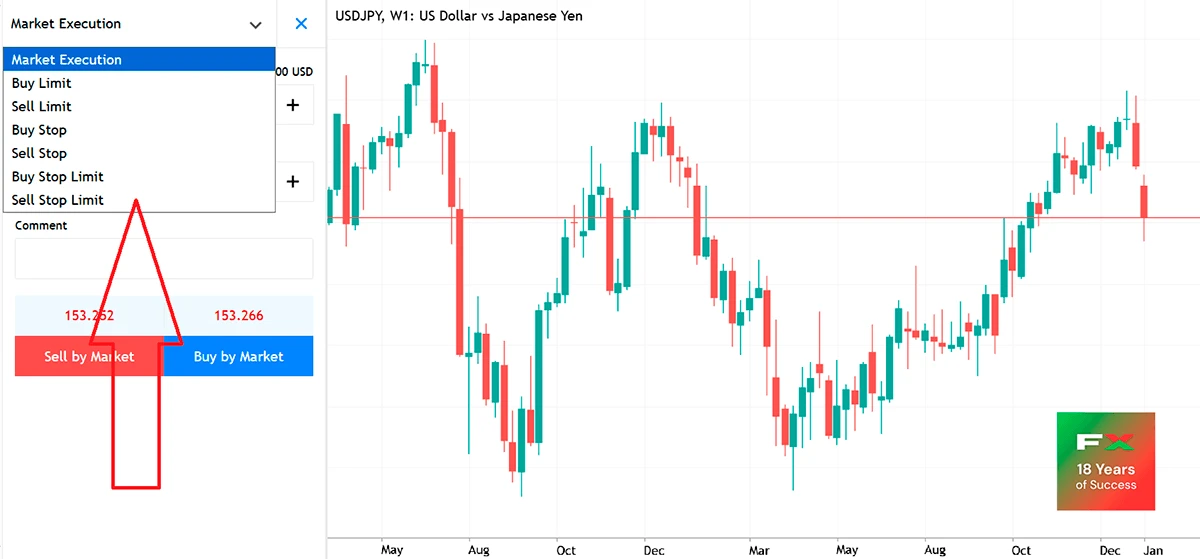
The illustration shows types of pending orders in MT5 WebTrader.
Why this is normal market behavior
This is not:
❌ system lag
❌ broker error
❌ platform malfunction
This is:
✅ real market liquidity mechanics
✅ volatility behavior
✅ standard execution rules
All exchanges and trading platforms work this way.
Why this matters for traders
Understanding pending order behavior helps traders:
- place orders with realistic buffers
- avoid tight levels during volatility
- manage risk during news
- understand execution outcomes
Most skipped orders are caused by liquidity gaps.
What’s next
Next article explains:
Why does my trade open at a different price than I clicked?
This dives into market execution vs instant execution.
返回 返回